- Stretching guide
- Travel
- In your seat
Stretches for long flights that won't bother your neighbour
Tiny moves that fit a small seat, a walk when the crew allows it, and a few kind minutes for your body once you land.
 By JPott Studios
About a 5 minute read
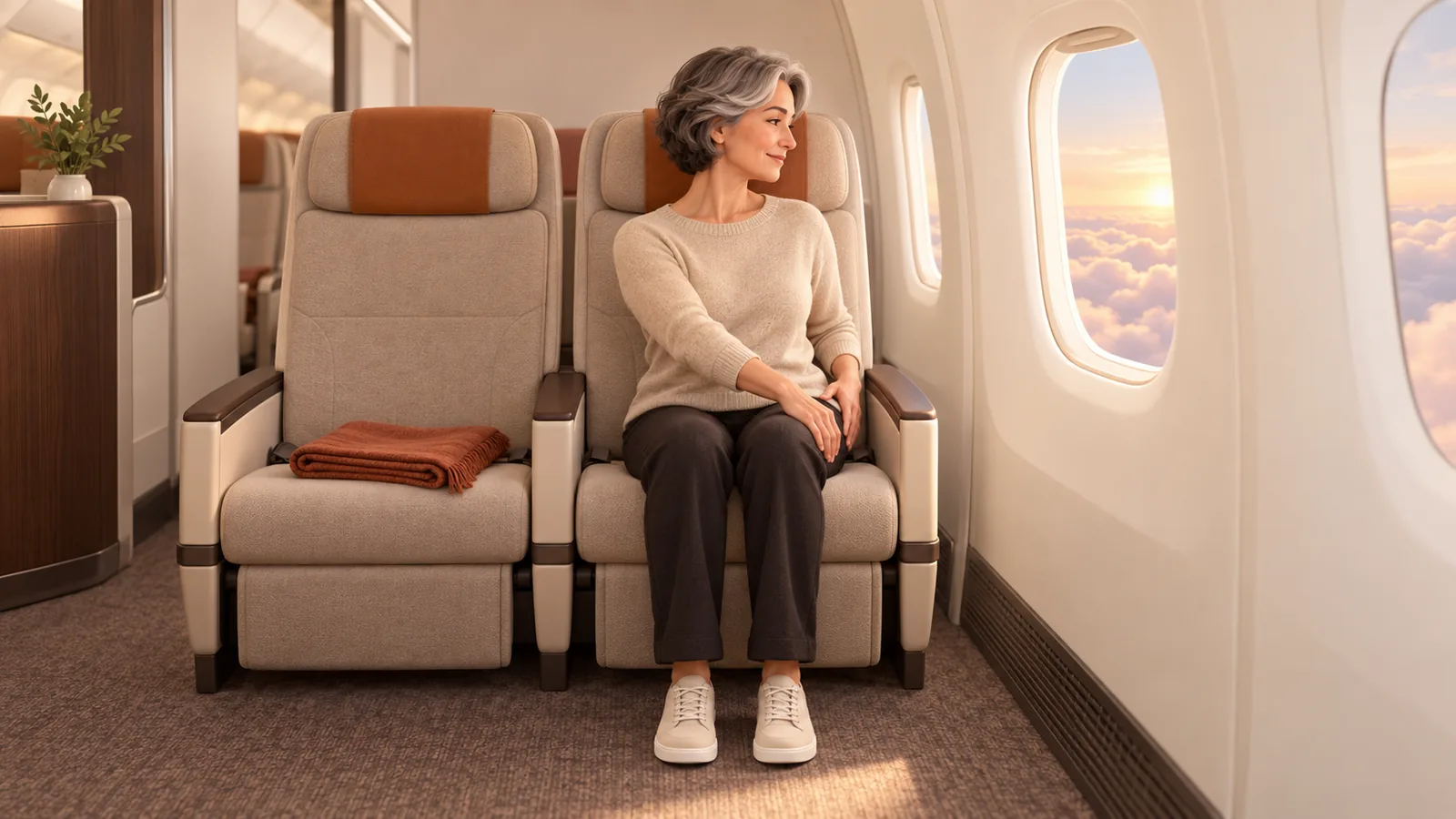
Stretches for long flights need to fit a cramped seat, so keep them small: ankle pumps, shoulder rolls and slow neck moves, every hour or so, without leaving your seat. Add a walk down the aisle when the crew allows it, then give your body five easy minutes once you land.
You can't do a full routine in economy, and you shouldn't try. But after hours with heavy legs and a neck stuck at whatever angle you dozed off in, those little moves make the trip much easier to bear.
Before you fly. This is general information, not medical advice. Sitting still for a long time is linked with a higher risk of blood clots in the legs for some people. If you've had a blood clot before, are pregnant, have recently had surgery, or have a health condition, ask your doctor before a long flight about what precautions are right for you. Stop any move that hurts.
A long flight in three parts
What to do, and when.
- In your seatSmall moves every hour or so while you are awake. Ankle pumps are the one to do most often.
- Up when you canA walk around the cabin when the seatbelt sign is off and the crew allows it, plus heel raises or a calf stretch if there is space.
- After you landFive easy minutes in your room: a neck release, a cross-body stretch, a gentle twist and a hamstring reach.
In-seat stretches for long flights that nobody will notice
Run through these every hour or so while you're awake. Each one takes under a minute, and none of them need an empty seat in front of you or your neighbour to shift.
-
Ankle pumps
Keep your heels on the floor and lift your toes up toward your shins. Then press them down and lift your heels, like working a pedal. Keep a slow, steady rhythm for about 30 seconds. Do this one most often. -
Ankle circles
Lift one foot just off the floor and circle it slowly, a few times each way. Then switch feet. -
Seated knee lifts
Sit tall and lift one knee a few centimetres, lower it, then lift the other. It's a slow march in your seat. About 10 on each side. -
Shoulder rolls
Roll your shoulders up, back and down in slow circles. Five or six is plenty, then go the other way. -
Ear to shoulder
Let one ear drop gently toward your shoulder and rest there for a few breaths. Don't pull. Come back to the middle slowly and do the other side. -
Chin tucks
Draw your chin straight back with your eyes level, as if you're making a small double chin, then let go. Handy after a nap with your head tipped against the window. -
Small seated twist
Sit tall with your hands resting on your thighs. Turn your chest a little to one side while your knees keep facing forward, then turn to the other side. Keep it small in a tight seat, and don't pull on the armrests. -
Hand and wrist circles
Open and close your hands a few times, then circle your wrists slowly both ways. Lovely after hours of holding a phone or a book.
The neck moves also star in our neck and shoulder stretches for screen tension. For stiff fingers, try the wrist and hand stretches for typing.
When should you get up and walk?
Many health services suggest getting up and walking around the cabin from time to time on a long flight, whenever the seatbelt sign is off and the crew allows it. An aisle seat makes this much easier, since you won't have to climb over anyone.
Once you're up, near the galley or the toilets, try these if there's space:
- Heel raises. Hold on to something steady, rise onto your toes, then lower slowly. Ten is enough.
- Calf stretch. With your hands on a wall or seat back, step one foot back and press that heel toward the floor until you feel a stretch down the back of your lower leg. Switch sides.
- A slow reach. Lace your fingers and reach up, only as high as the ceiling and your shoulders allow.
Always follow the crew's instructions. Keep out of the aisle when the trolleys are moving, and hold on during turbulence.
What else helps on a long flight?
A few plain habits make the stretching easier:
- Drink water regularly, because cabin air is dry.
- Keep the space under the seat in front of you clear enough to move your feet.
- Wear loose, comfortable clothes and shoes you can slip off and on.
- Set a gentle reminder on your phone or watch for once an hour while you're awake.
Before you board
Small things that help on a long flight.
- Drink water regularly. Cabin air is dry.
- Keep the space under the seat in front clear for your feet.
- Wear loose clothes and shoes you can slip off and on.
- Set a gentle reminder for once an hour while you are awake.
Hips feel a long haul too. If yours are tight afterwards, the hip stretches after sitting all day work just as well after a flight.
From JPott Studios
One calm email a month
One useful tip, one free printable or tool, and a short note from our apps. Join and get the free welcome pack: printable trackers, a packing list maker and more.
After you land: five easy minutes
When you get to your room, a few slow moves help you shake off the trip:
- Neck release
Tilt your head gently toward each shoulder in turn, without rolling it backward. - Cross-body stretch
Draw one arm across your chest with the other hand for a few breaths, then switch. - Gentle twist
Stand tall and turn softly side to side with loose arms. - Hamstring reach
Put one heel forward with the toes up. Tip forward a little from the hips with a long back, and hold. Switch legs.
Those four moves make up the Travel Unwind routine in Gentle Range, which is part of Premium. The app's free Chair Session is done entirely sitting down, so it suits a long train or bus ride. For more seated ideas, see our chair stretches for older adults, or follow the free 5-minute desk stretch timer on a layover.
From JPott Studios
One calm email a month
One useful tip, one free printable or tool, and a short note from our apps. Join and get the free welcome pack: printable trackers, a packing list maker and more.