- Stretching guide
- Seated
- Older adults
Chair stretches for older adults: a gentle 10-minute routine
Thirteen seated moves, about ten minutes, and nothing on the floor. Set your chair up safely, then make each move easier or a little stronger as you need.
 By JPott Studios
About a 7 minute read
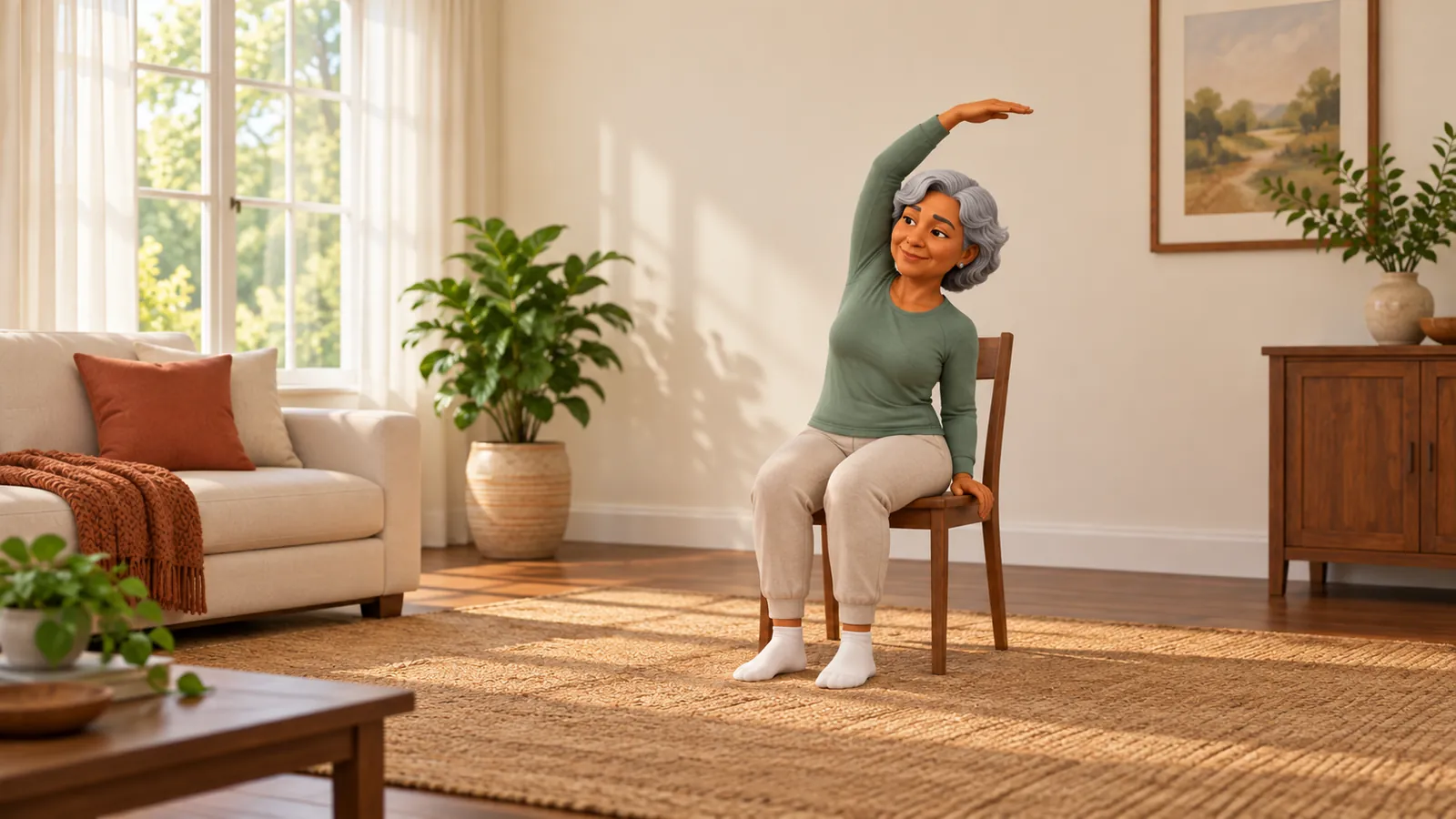
Chair stretches for older adults are one of the gentlest ways to move every day. You stay seated the whole time and the chair keeps you steady, so there's no getting down to the floor or struggling back up. The routine below takes about ten minutes, and you can do it in your living room in whatever you're wearing.
It's written with older adults in mind, but it suits anyone who wants something gentle: someone easing back in after time off, someone having a low energy day, or someone who'd simply rather sit.
Before you start. This is general information, not medical advice. Move slowly, stay in a range that feels comfortable, and stop if anything hurts. If you've had a recent fall, a joint replacement, osteoporosis, heart or blood pressure problems, or you often feel dizzy, ask your doctor or physiotherapist which moves suit you before you begin.
How to set up your chair safely
A couple of minutes of setup makes the whole routine feel steadier.
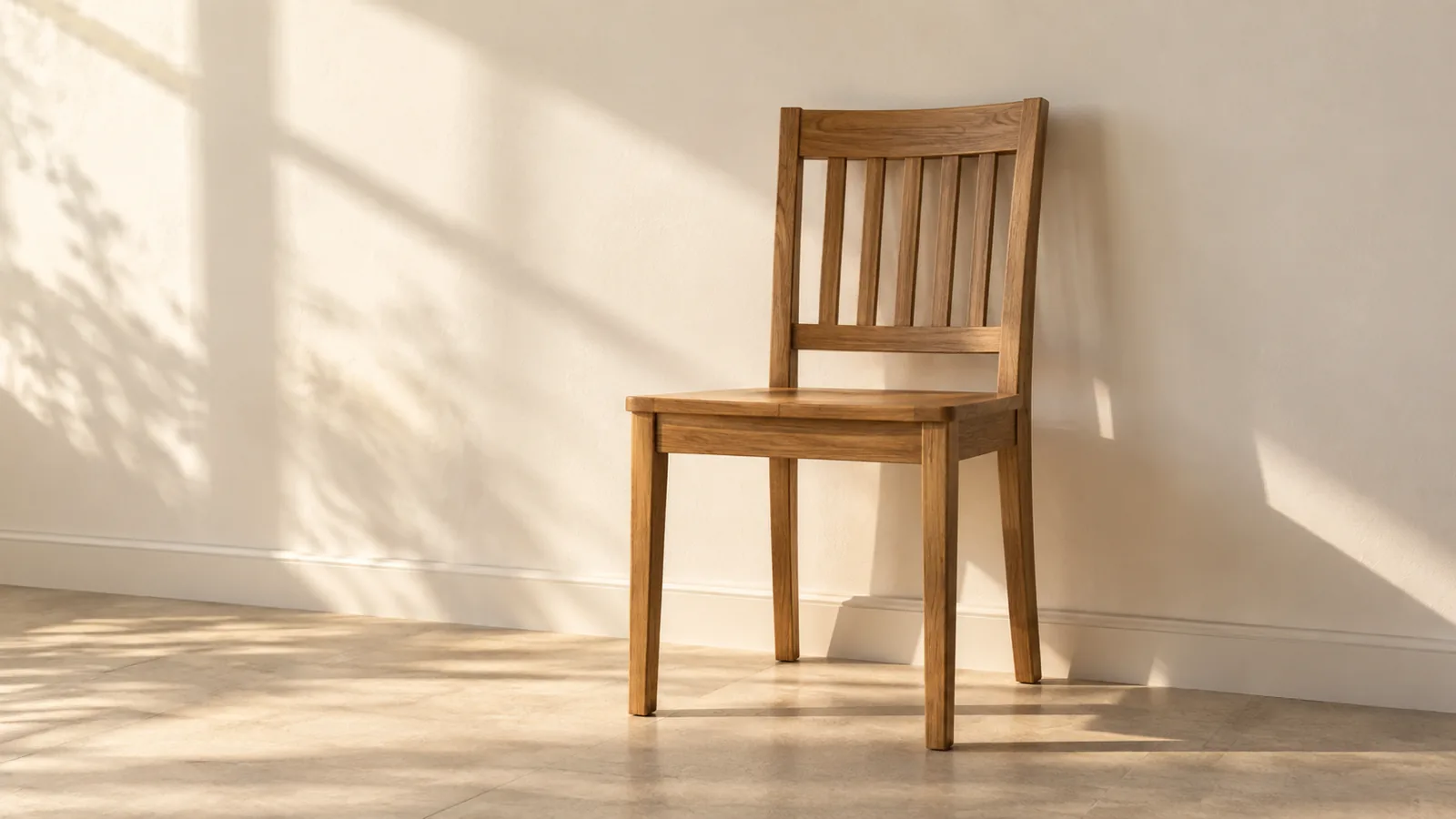
- Pick a sturdy chair with no wheels, no rocking and no folding parts. A dining chair is ideal. Push it back against a wall so it can't slide.
- Arms or no arms is up to you. A chair without arms gives you more room to move, while one with arms makes it easier to stand up afterwards.
- Your feet should rest flat on the floor. If they don't reach, slide a firm cushion or a thick book under them.
- Wear flat shoes with some grip, or go barefoot on a floor that isn't slippery. Socks on a smooth floor can slide.
- Keep a glass of water and your phone within reach, with good light and a clear space around you.
The 10-minute routine, move by move
Sit near the front of the chair, tall but not stiff. Breathe normally the whole way through and never hold your breath. The full set takes about ten minutes.
-
Settling breath 1 minute
Rest your hands on your thighs. Breathe in comfortably, then let the out breath take a little longer than the in breath. Each time you breathe out, let your shoulders soften. -
Shoulder rolls 40 seconds
Make small, slow circles with your shoulders, backward first and then forward. Let them grow a little bigger only if that feels good. -
Seated march 45 seconds
Hold the sides of the seat. Lift one foot a little off the floor, lower it gently, then lift the other. Keep an easy pace, like a slow walk. -
Ankle pumps 45 seconds
Slide one heel forward along the floor. Point your toes away, then pull them back toward you. Switch legs halfway. Stiff ankles and calves tend to love this one. -
Knee straightener 30 seconds each side
Slowly straighten one knee until the foot lifts, hold for a breath, then lower it. Do a few, then switch. Stop just short of locking the knee. -
Side reach 20 seconds each side
Lift one arm and lean gently the other way, reaching up and over. Keep both sit bones heavy on the chair. If it feels steadier, hold the seat with your other hand. -
Seated twist 20 seconds each side
Sit tall and turn your chest to one side, with a hand resting on the back of the chair or on your thigh. Let your chest lead, not your neck, and never pull to go further. -
Seated cat-cow 45 seconds
Rest your hands on your knees. As you breathe in, lift your chest a little. As you breathe out, round your upper back and let your head follow. Move slowly between the two. -
Seated hamstring stretch 20 seconds each side
Reach one heel forward with the toes up and the knee soft. Keep your back long and tip forward from the hips until you feel it along the back of the leg. -
Seated hip opener 20 seconds each side
Let one knee fall gently out to the side and back again, a few times. If that's easy and your hips are happy with it, rest one ankle on the opposite shin or knee and tip forward slightly. -
Chest opener 30 seconds
Hold a towel or scarf behind your back with both hands, or just rest your hands on the seat behind you, and let the front of your chest widen. -
Ear to shoulder 20 seconds each side
Let one ear drift toward the shoulder on the same side, without lifting the shoulder or pulling. Come back to centre slowly before you change sides. -
Quiet finish 1 minute
Sit back, rest your hands in your lap and take a few slow breaths. There's no hurry to get up.
The seated routine at a glance
Each block is one move, sized by how long it lasts.
How to stand up safely afterwards
Getting up is part of the routine too, so take it slowly. Some people feel light-headed after sitting for a while.
Shuffle to the front of the chair and bring your feet back a little so they're under your knees. Lean forward, nose over toes, and push up through your legs, using the arms of the chair if it has them. Then stand still for a moment before you walk. If you feel dizzy, sit back down.
Standing up afterwards
Take it slowly. Some people feel light-headed after sitting for a while.
- Shuffle forwardMove to the front of the chair.
- Feet under kneesBring your feet back a little.
- Nose over toesLean forward and push up through your legs, using the chair arms if it has them.
- Stand still a momentThen walk. If you feel dizzy, sit back down.
How to make it easier or a little stronger
To make it easier, make every movement smaller, move one arm or one leg at a time, and rest between moves for as long as you like. On a really low day, pick just four moves, such as the breath, shoulder rolls, ankle pumps and the twist.
Once the routine starts to feel comfortable, hold each stretch for one extra slow breath, or add a second round of the moves you enjoy most.
And if you feel steady on your feet, you can add a little standing. Stand behind the chair, hold its back, and do a few slow heel raises or marches.
For a shorter seated set on busy days, these desk stretches for a stiff back are nine small moves you can do without leaving your chair.
From JPott Studios
One calm email a month
One useful tip, one free printable or tool, and a short note from our apps. Join and get the free welcome pack: printable trackers, a packing list maker and more.
Fitting chair stretches into your day
Tie the routine to something you already do, like your morning cup of tea or a favourite programme. A little most days tends to feel better than a lot now and then.
On slow mornings, a few gentle stretches you can do in bed can come first, before you even sit up. And if your neck and shoulders are the stiffest part of you, there's a longer set of neck and shoulder stretches to try.
Public health guidance in many countries also encourages older adults to include some strength and balance activities each week. If you're able, a physiotherapist or a local class can suggest safe ones for you.
If you'd like to be guided, Gentle Range has a free Chair Session done entirely sitting down, and a free Everyday 15 routine with chair-supported options. The full library adds Supported 22, a longer standing and chair flow with no floor transitions. To try a timed break right now, the free 5-minute desk stretch timer counts you through nine seated moves in your browser.
Questions about chair stretches for older adults
Are chair stretches good for older adults?
For many people, yes. The chair gives you support and balance, and nothing happens on the floor, so there's no getting down or back up. They're a gentle way to move every day, but they don't replace advice from your own doctor or physiotherapist.
How long should a chair stretching session be?
Five to fifteen minutes suits most people. On a low day, two or three moves still count. A little most days tends to feel better than one long session a week.
What if I can't lift my arms very high?
Work within the range you have. Keep your hands on your thighs, reach one arm at a time, or stop at shoulder height. The stretch should feel mild wherever you stop, and skipping a move is always fine.
Should chair stretches hurt?
No. You should feel a mild, even pull that eases as you breathe. Sharp pain, pins and needles, dizziness or chest discomfort mean stop, and speak to a doctor before you carry on.
Is it safe to stretch after a hip or knee replacement?
Often, yes, but ask your surgeon or physiotherapist first. After some operations, people are told not to cross their legs or bend the hip past a certain point for a while, so you may need to leave out or change some moves.
From JPott Studios
One calm email a month
One useful tip, one free printable or tool, and a short note from our apps. Join and get the free welcome pack: printable trackers, a packing list maker and more.