- Stretching guide
- Winter
- Mornings
Gentle stretches for stiff mornings in winter
Cold room, cold floor, and knees that feel ten years older than they did in August. Here's one winter morning, walked through stretch by stretch, from under the duvet to the kettle.
 By JPott Studios
About an 8 minute read
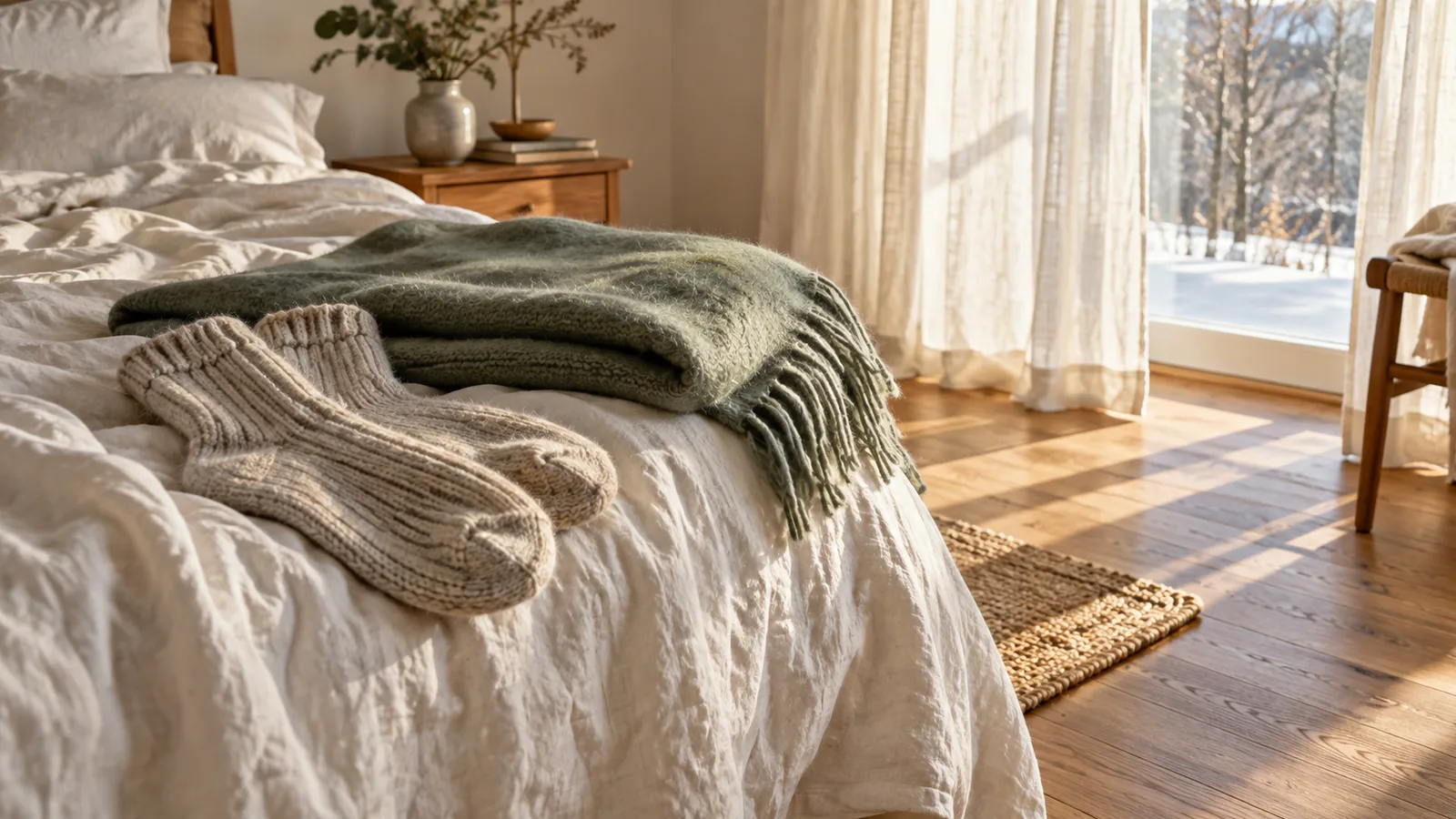
The best stretches for stiff mornings in winter are small, slow ones you start while you're still warm: a few in bed, a few sitting on the edge of the bed, and a few standing in the kitchen. Warm up first and stretch second, and the whole thing takes about five minutes.
Plenty of people notice it once the weather turns. Getting out of bed takes longer, the first few steps feel creaky, and bending to put socks on is suddenly a project. It usually eases as you get moving, and a gentle start can help it ease sooner.
Before you start. This is general information, not medical advice. Move only within a comfortable range and stop if anything hurts. If you have arthritis, a joint or back problem, balance concerns, or you're pregnant or recovering from surgery, check with a doctor or physiotherapist about which moves suit you.
Why do you feel stiffer on winter mornings?
There isn't one simple answer, and the research is more mixed than you might expect. A large UK project called Cloudy with a Chance of Pain, run by the University of Manchester, asked thousands of people with long-term pain to log their symptoms alongside the local weather. It found a modest link between more pain and damp, windy days with low air pressure, rather than cold on its own.
What most of us can feel for ourselves is simpler. In winter we tend to move less, curl up tighter under the covers, and step out of a warm bed into a cold room. Muscles and joints usually feel looser once they've warmed up and been moved, and a cold morning simply starts further from that point.
| What changes in winter | What tends to help |
|---|---|
| A cold bedroom and a cold floor | Start moving while you're still under the covers |
| Curled up for hours in one position | Unfold slowly: ankles, knees, then back |
| Less walking on dark, wet days | A short indoor walk or march before you stretch |
| Hunched shoulders against the chill | Shoulder rolls, and a warm layer straight away |
| Rushing on dark mornings | Pair your stretches with something you already do, like the kettle |
So the aim isn't to force a stiff body into a big stretch. It's to warm up in stages, where you already are, and let the stiffness wear off as you go.
One winter morning, stretch by stretch
Picture a weekday in December. The alarm goes at half past six, it's still dark, and the bedroom is chilly. Here's how the first ten minutes can go, with nine small moves tucked into things you'd be doing anyway.
The winter morning at a glance
One block per move, drawn to the length of each one.
You don't have to do every stage. On a rushed morning, the two moves in bed and the kettle stretches are plenty.
Under the duvet: two moves before you get up
The alarm has gone. Before you throw the covers back, stay where it's warm for one more minute and start at the far end of your body.
-
Ankle pumps and circles 40 seconds
Lying on your back, point your toes away, then pull them back toward you, ten slow times. Then draw a few lazy circles with each foot, one way and then the other. Your calves wake up first, which makes those first steps on a cold floor feel steadier. -
Knee hugs 20 seconds each side
Bend both knees with your feet flat on the mattress. Draw one knee gently toward your chest, holding behind the thigh, and breathe out slowly. Lower it and swap. After a night curled on one side, this is a kind way to unfold your lower back.
If you'd like to stay a little longer, our guide to stretching in bed has five more moves that start lying down. Then roll onto your side and push yourself up to sitting with your arms, rather than sitting straight up from your back.

On the edge of the bed: three moves before you stand
Now sit on the edge of the bed with your feet flat on the floor. If the floor is cold, put your socks or slippers on first. This is where many people stand up too fast and feel it, so take a minute here.
-
Shoulder rolls 30 seconds
Lift your shoulders toward your ears, draw them back, and let them drop. Five slow rolls backward, then a few forward. Cold mornings make most of us hunch, and this undoes a little of it before the day starts. -
Seated reach and side lean 20 seconds each side
Reach one arm up and over your head and lean gently the other way, feeling the stretch down your side. Keep both sitting bones on the bed. Come back to the middle and swap. -
Seated march 30 seconds
Lift one foot a little off the floor, lower it, then the other, at an easy pace. It gets blood moving through your hips and legs before you ask them to carry you.
Then stand up slowly, with a hand on the bedside table if you like, and take a few steps. On days when standing feels like a lot, our ten minute seated routine suits anyone who prefers a seat under them.
While the kettle boils: four standing moves
By the time you reach the kitchen, you've been moving for a few minutes and you're warmer than when you woke. Switch the kettle on, rest your hands on the counter, and use the wait.
-
Heel raises 30 seconds
Hands on the counter, feet hip width apart. Rise slowly onto the balls of your feet, then lower your heels with control. Eight to ten easy lifts. -
Counter calf stretch 25 seconds each side
Step one foot back, keeping that heel on the floor and the leg fairly straight. Bend the front knee a little and lean gently toward the counter until you feel the back of the lower leg. Swap sides. -
Hip circles 30 seconds
Hands on your hips or the counter, knees soft. Draw slow, small circles with your hips, a few each way, as if stirring a big pot. -
Standing twist 30 seconds
Feet planted, knees soft, arms loose. Turn your upper body slowly from side to side and let your arms swing along. By now, most people find the twist goes a little further than it would have in bed.
The kettle clicks off, and you're done. For a longer standing set on mornings when you have more time, our morning stretch routine for beginners adds a big overhead reach and a slow forward fold.
From JPott Studios
One calm email a month
One useful tip, one free printable or tool, and a short note from our apps. Join and get the free welcome pack: printable trackers, a packing list maker and more.
What if you're still stiff an hour later?
Some mornings the stiffness hangs on. A few things tend to help more than stretching harder:
- Keep moving lightly. A walk to the shop, a few minutes of marching on the spot, or climbing the stairs twice often does more than one more stretch.
- Warm up from the outside. A warm shower, a hot water bottle on the lower back, or an extra layer can make movement feel easier.
- Try your stretches again later. Many people find they move more freely by mid-morning, once they've been up for a while.
- Break up long sits. If you work at a desk, our hip stretches after sitting all day stop the stiffness building up again by evening.
Some kinds of morning stiffness are worth a proper look, though. If it lasts more than about half an hour most mornings, comes with swollen, warm or painful joints, or is getting steadily worse, please see a doctor. It may be nothing more than winter, but it's worth ruling other things out.
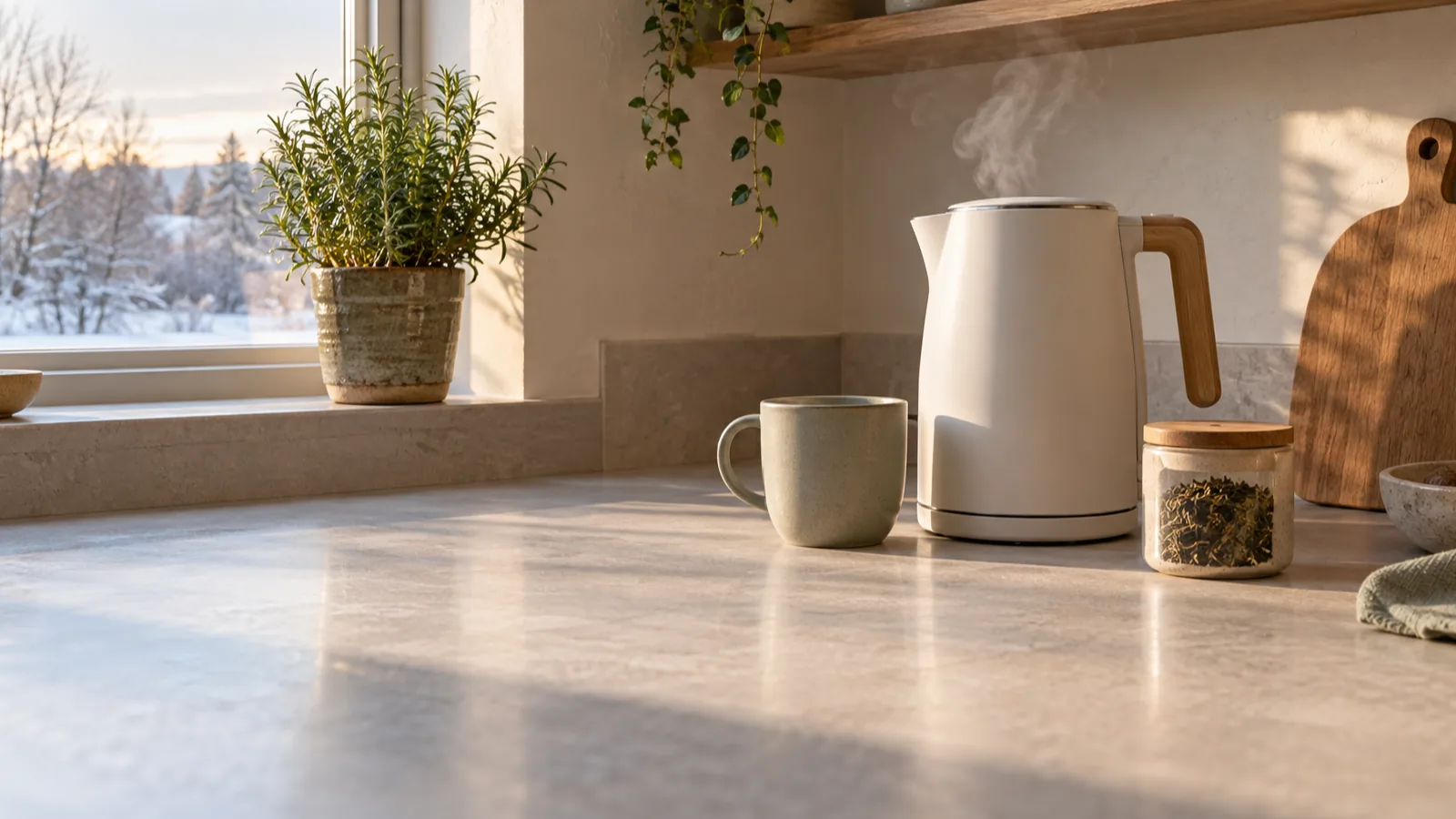
Small winter habits that make mornings easier
A few tiny changes the night before can take the edge off the morning:
- Put socks or slippers right by the bed, so your feet never meet a cold floor.
- Keep a warm layer on the chair, ready to pull on as soon as you sit up.
- If it's safe and affordable, let the bedroom warm up a little before you get up, with the heating on a timer.
- Move a bit in the evening too. Five slow minutes before bed can mean a gentler morning.
- Keep moving through the day. On grey, wet days, a walk around the house between tasks still counts.
Want someone to talk you through it on a dark morning? Gentle Range, the stretching app we make, has a free Morning Wake-Up routine with a calm voice that tells you every move, so you can follow along with your eyes still half closed.
Winter stiffness questions
Why am I stiffer in winter?
Most people move less in cold weather, sleep curled up, and start the day in a cold room, so muscles and joints begin further from feeling loose. Research on weather and aches is mixed, but a large UK study did find a modest link between more pain and damp, windy days with low air pressure.
Is it better to stretch in bed or after getting up in winter?
Both have a place. Small moves in bed, like ankle circles and knee hugs, are a warm way to start, and the standing stretches feel better once you've been moving for a few minutes. Stretching straight from cold into a deep hold is the thing to avoid.
How long should a winter morning stretch take?
Five minutes is plenty for most people. The routine on this page takes just over five minutes, and even the two moves in bed plus a few at the kettle make a difference on a rushed day.
Should I stretch if my joints ache in the cold?
Gentle movement usually feels better than staying still, as long as it stays comfortable. Keep every move small and slow, and stop if anything hurts. If aching joints are new, swollen or getting worse, see a doctor or physiotherapist.
Does a warm shower help morning stiffness?
Many people find warmth makes it easier to move, so a warm shower before or after your stretches can help. Stretching straight after a shower, while you're still warm, often feels easier than stretching first thing.
From JPott Studios
One calm email a month
One useful tip, one free printable or tool, and a short note from our apps. Join and get the free welcome pack: printable trackers, a packing list maker and more.